Hikes in California

California is blessed with a variety of beautiful landscapes. You can stroll along beautiful coastlines, summit 14,000-foot peaks, or hike up desert canyons. California has so much to offer! Hikespeak has write-ups for over 450 hikes in California (including over 175 Los Angeles area hikes). California also has campgrounds and other outdoor attractions that you can learn about on hikespeak. ... Read more.
Camping in the Western Divide Ranger District of Sequoia National Forest and Giant Sequoia National Monument
The largest area of Giant Sequoia National Monument lies in the Western Divide Ranger District of Sequoia National Forest, on the west side the Sierra Nevada Mountains south of Sequoia National Park. In addition to cozy car camping, the national monument offers access to giant sequoia groves and several fine trails. Of the ten campgrounds in the Western Divide Ranger District, Quaking Aspen is one of the largest, with 32 well-spaced sites that can be reserved online (for a fee) or on a first-come first-serve basis. ...Read more.
By: Published: June 17, 2010 Last updated: April 12, 2026
Salmon Creek Falls in Los Padres National Forest
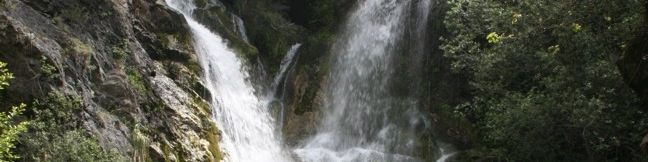
Salmon Creek Trail is a popular track with backpackers venturing deep into the Silver Peak Wilderness in the Monterey District of Los Padres National Forest, but you only need to hike a quarter mile round trip from Highway One to see a beautiful 120-foot waterfall. Unlike the trail overlooking beautiful McWay Falls farther up the Big Sur Coast, this hike brings you up close and person with a powerful cascade pouring down the Santa Lucia Mountains. ...Read more.
Distance: 0.25 miles · Elevation change: 60 feet
By: Published: May 28, 2010 Last updated: December 9, 2025
Jade Cove and Plaskett Rock Point in Los Padres National Forest (Big Sur)
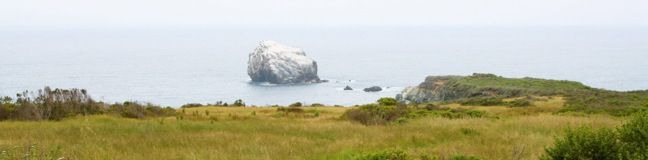
Along the bluffs of the Big Sur Coast protected by Los Padres National Forest is a scenic and easy ocean-view hike. Jade Cove and Plaskett Rock Point are just south of Plaskett Creek Campground on the west side of Highway One. Visited together, they form a 1.5-mile hike. This hike has two trailheads. Both are unmarked a somewhat difficult to spot. From Plaskett Creek Campground drive a quarter mile south and scan the west side of the road for the Plaskett Rock Point trailhead. ...Read more.
Distance: 1.5 miles · Elevation change: 150 feet
By: Published: May 28, 2010 Last updated: April 9, 2026
Partington Cove in Julia Pfeiffer Burns State Park
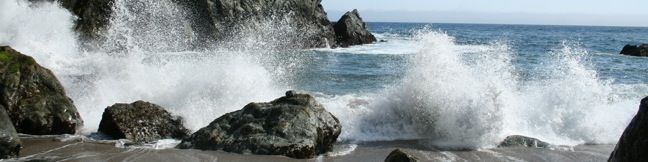
A great way to explore the dramatic waterfront on the Big Sur coast is to take a hike down the action-packed Partington Cove Trail. Partington Cove is part of Julia Pfeiffer Burns State Park begins from Highway One, just north of McWay Falls. Partington Cove Trail The 1.5-mile hike to Partington Cove begins at the top of a gated fire road on the west side of Highway One and descends toward the coast to a junction at an information kiosk 0. ...Read more.
Distance: 1.5 miles · Elevation change: 270 feet
By: Published: May 27, 2010 Last updated: April 8, 2026
McWay Falls in Julia Pfeiffer Burns State Park
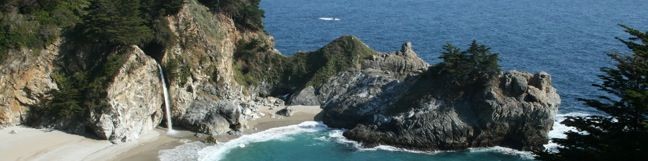
The overlook trail for McWay Falls is a must-stop for anyone taking the scenic drive up Highway One along the Big Sur Coast. The waterfall is stunning, dropping some 80 feet onto a pristine beach in an enchanting cove. It is a short 0.6-mile round trip hike to a viewpoint for McWay Falls, which can be reached directly from Highway One or from parking areas withing Julia Pfieffer Burns State Park. ...Read more.
Distance: 0.6 miles · Elevation change: 50 feet
By: Published: May 26, 2010 Last updated: April 8, 2026
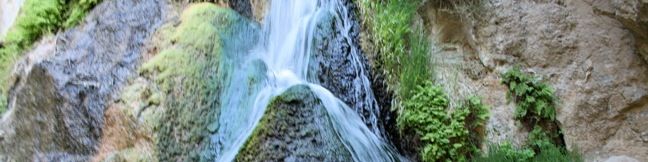
Darwin Falls in Death Valley National Park
Darwin Falls should not be part of Death Valley National Park. In fact, the year-round waterfall does not belong in the California desert at all. The hike starts as innocently as so many nearby trails, at the mouth of a gravel-bottom canyon, but after 0.7 miles the canyon closes and the trail enters a lush oasis of cottonwoods and willows. The next 0. ...Read more.
Distance: 2 miles · Elevation change: 275 feet
By: Published: May 25, 2010 Last updated: December 5, 2025
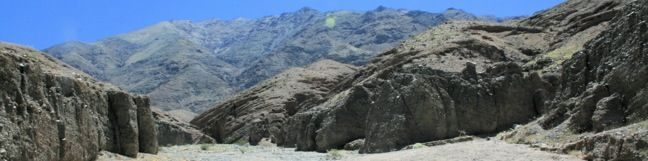
Sidewinder Canyon in Death Valley National Park
Sidewinder Canyon is located at the base of the Black Mountains on the east side of Death Valley National Park south of Badwater Basin. The canyon is fairly wide with a gravel bottom and forty-foot stone walls on both side. Within these walls lie tight slot canyons with pour-overs, carve outs, and dark passages that beg to be explored. There are three slot canyons off the south wall of the canyon and other slightly wider side canyons worth experiencing. ...Read more.
Distance: 7 miles · Elevation change: 750 feet
By: Published: May 24, 2010 Last updated: April 19, 2026
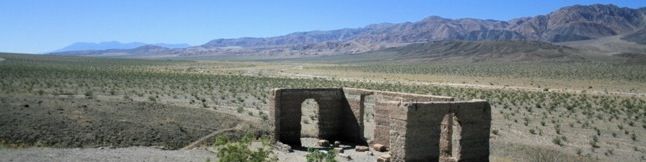
Ashford Mill in Death Valley National Park
The Ashford Mill ruins are visible to those driving up route 178 to Badwater Basin and Furnace Creek in Death Valley National Park. The ruins rest on the valley floor at an elevation of 121 feet below sea level. They serve as a picturesque example of the rigors of life in this harsh desert. In 1914, Ashford Mill was built to process gold from the Ashford Mine, located in the mountains to the east. ...Read more.
Tagged with · Mines · National Parks · Ruins
By: Published: May 24, 2010 Last updated: April 15, 2026
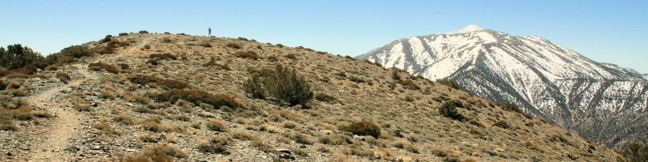
Wildrose Peak in Death Valley National Park
Wildrose Peak resides on the northern end of a group of peaks that form the top of the Panamint Mountain Range, which runs down the west side of Death Valley National Park. The 9,064-foot peak is about seven miles north of Telescope Peak, the highest point in the park at 11,049 feet. Wildrose sports an expansive view of the Panamint Mountains, Badwater Basin, and the surrounding desert landscape. ...Read more.
Tagged with · National Parks · Summits
Distance: 8.4 miles · Elevation change: 2200 feet
By: Published: May 22, 2010 Last updated: April 18, 2026
Charcoal Kilns in Death Valley National Park
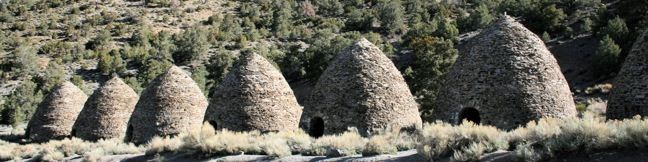
The Charcoal Kilns are a well-preserved attraction in Death Valley National Park. These conical constructions converted lumber to charcoal from 1879 to 1882. During that period, workers burnt logs in these giant airtight ovens, pyrolyzing pine to charcoal, which was then hauled to the nearby Modock Mine smelter. The coal-making process took about two weeks. ...Read more.
Tagged with · National Parks
By: Published: May 22, 2010 Last updated: April 13, 2026