Mesquite Flat Sand Dunes
in Death Valley National Park
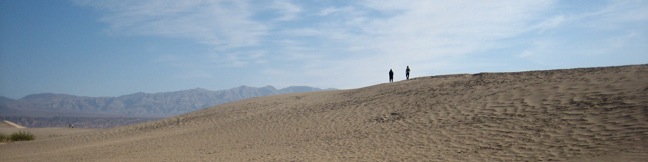
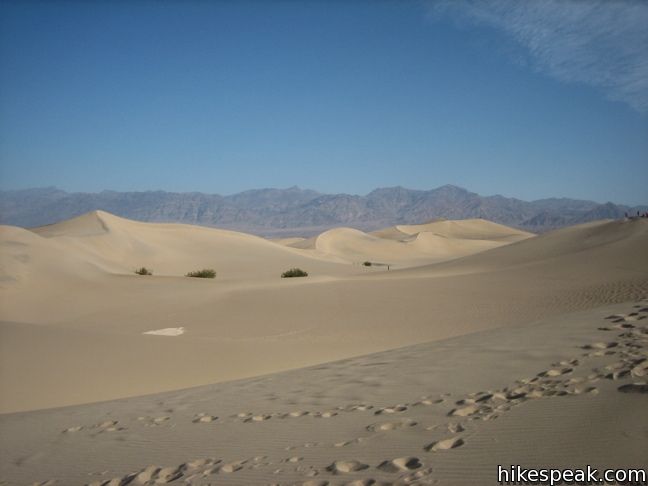
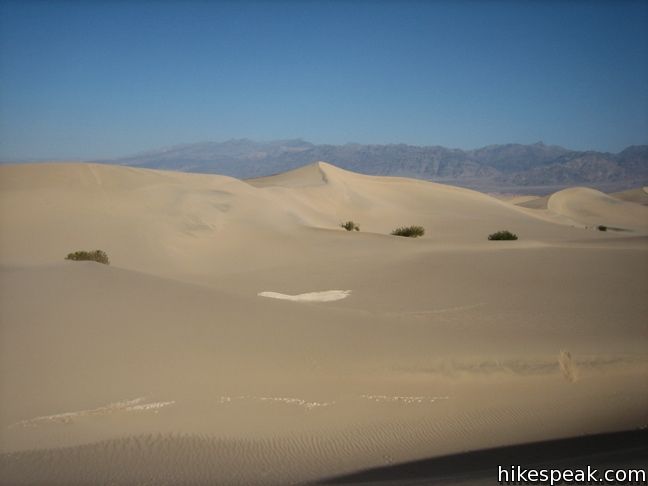
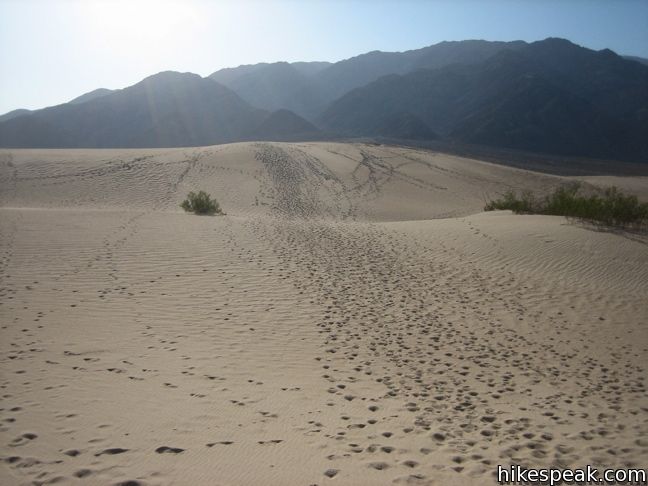
The most visible (but not the largest) sand dunes in Death Valley National Park are the Mesquite Flat Dunes. A small parking lot located off Highway 190, two miles south of Stove Pipe Wells offers a great starting point for a trek out to the dunes.
There is no formal trail to follow, just strike out for the high sands, which are reachable within a half mile. Cross the ridges and aim for the point of your choosing. The highest dune rises 100 feet above the desert floor.
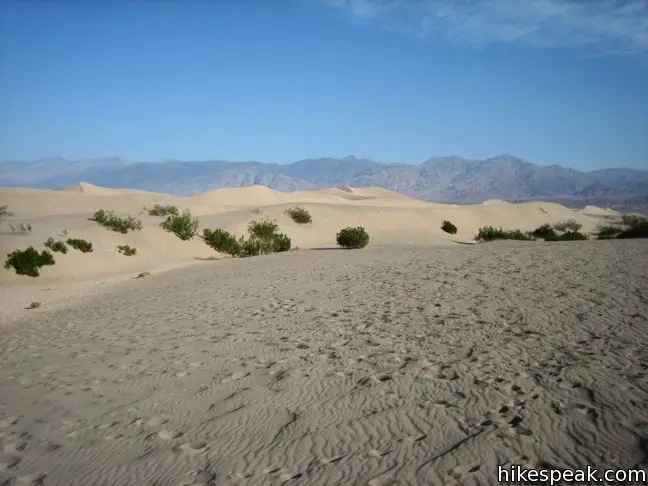
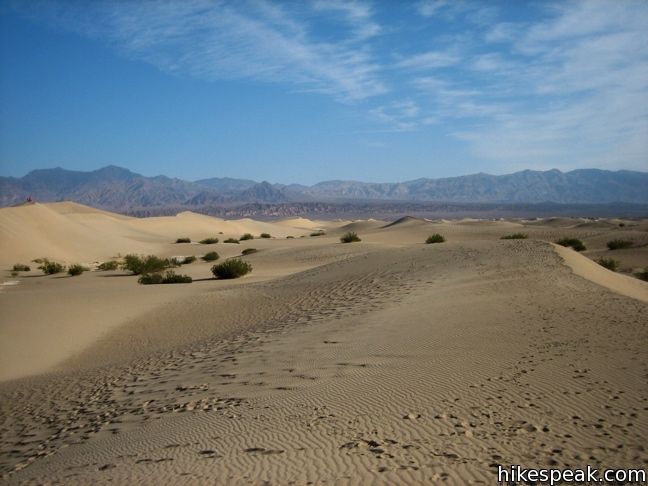
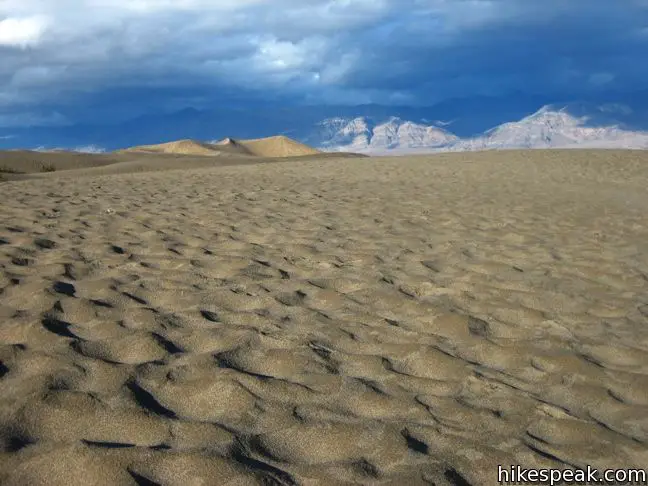
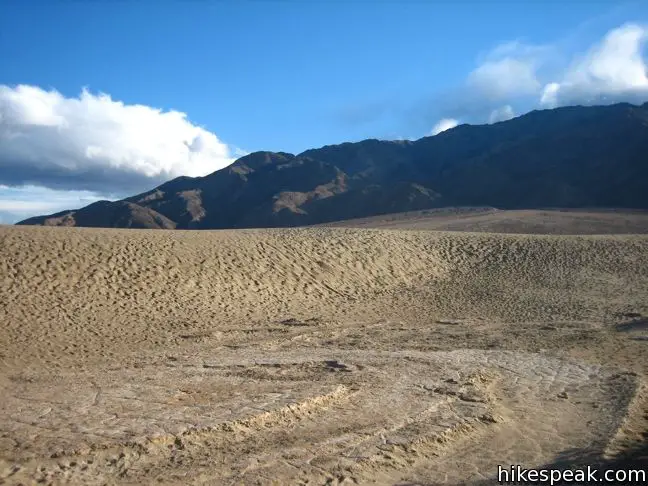
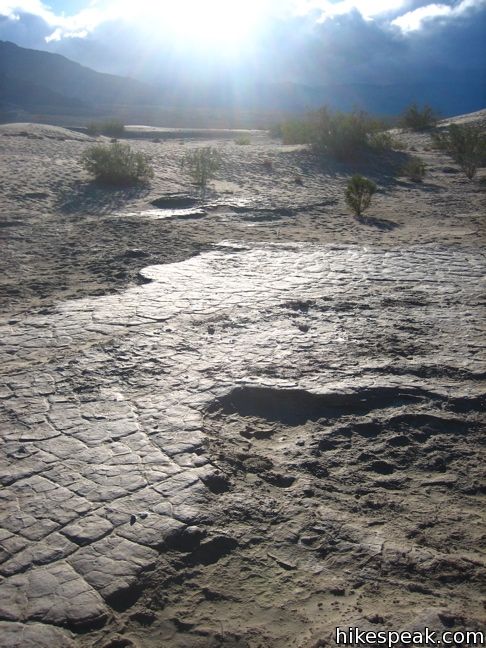
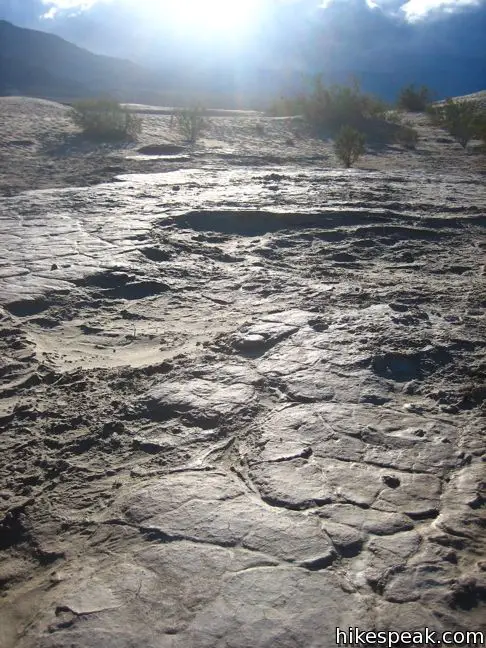
The Mesquite Flat Dunes fill the center of a Y-shaped valley. That geography lead to the creation of the dunes and also makes for vast views. In some areas, the sand has dried to form hard clay, which lies on the desert floor cracked in polygon shaped patterns.
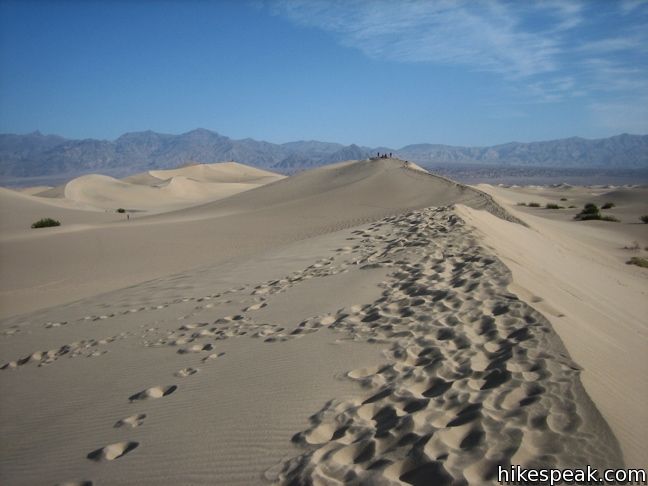
Pack plenty of water and expect to hike at least two miles among the dunes, depending on your ambition. If high winds are present, moving sand can be quite stinging and make hiking the dunes less enjoyable. Otherwise, have fun walking over, and running down the Mesquite Flat Sand Dunes. Death Valley National Park has an entrance fee, but no permit is required to hike on the dunes.
Directions to the Trailhead
- From Furnace Creek drive 22 miles northwest on Highway 190.
- Two miles before Stovepipe Wells, turn right into a parking lot for the sand dunes.
Trailhead Location
Trailhead address: California 190, Death Valley National Park, CA 92328
Trailhead coordinates: 36.6062, -117.1150 (36° 36′ 22.3″N 117° 06′ 54.0″W)
Use the map below to view the trail and get directions:
Or view California Desert trails and campgrounds in a larger map



 | Salt Creek This easy one mile out-and-back crosses a short boardwalk bordering a little creek. |
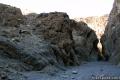 | Grotto Canyon This 2 to 4 mile hike requires a bit of climbing and is a lesser-visited trail in Death Valley. |
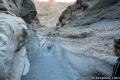 | Mosaic Canyon This 1 to 4-mile hike starts up a smooth marble slot canyon and exposes visitors to plenty of great Death Valley geology. |
 | Badwater Basin This is the lowest place in North America — a required stop for first time visitors to Death Valley. |
 | Death Valley Explore more destinations in Death Valley National Park. |
 | Death Valley Campgrounds Nine campgrounds are spread throughout this large park to facilitate your visit. |
Common Questions about Mesquite Flat Sand Dunes in Death Valley National Park
- Is the trail open?
- Yes. You should expect to find that Mesquite Flat Sand Dunes in Death Valley National Park is open. There are no recent reports of trail closures. If you discover that the trail is closed, please help your fellow hikers by reporting a closure.
- Do I need a permit for this hike?
- Yes. National Park Entrance Fee.
- How much time does this hike take?
- It takes approximately 1 hour 15 minutes to hike Mesquite Flat Sand Dunes in Death Valley National Park. Individual hiking times vary. Add extra time for breaks and taking in the views.
- How long is this hike?
- The hike to Mesquite Flat Sand Dunes in Death Valley National Park is a 3 mile out and back with 100 feet of elevation change.
- Are dogs allowed on this trail?
- No, dogs are likely not allowed on Mesquite Flat Sand Dunes in Death Valley National Park. The trail is primarily open to hikers.
- Where is the trailhead located?
- The trailhead for Mesquite Flat Sand Dunes in Death Valley National Park is located in Death Valley National Park, CA.
Trailhead Address:
California 190
Death Valley National Park, CA 92328
Trailhead Coordinates:
36.6062, -117.115 - What are the driving directions to the start of the hike?
To get to the trailhead: From Furnace Creek drive 22 miles northwest on Highway 190. Two miles before Stovepipe Wells, turn right into a parking lot for the sand dunes.
View custom Google Maps directions from your current location.
- Are there other trails near Mesquite Flat Sand Dunes in Death Valley National Park?
- Yes, you can find other nearby hikes using the Hikespeak Hike Finder Map.

[…] sun is retiring for the day as we come upon Mesquite Flats Sand Dunes. Rising out of the salt flats on the northern end of the valley, the fine particles are trapped […]